
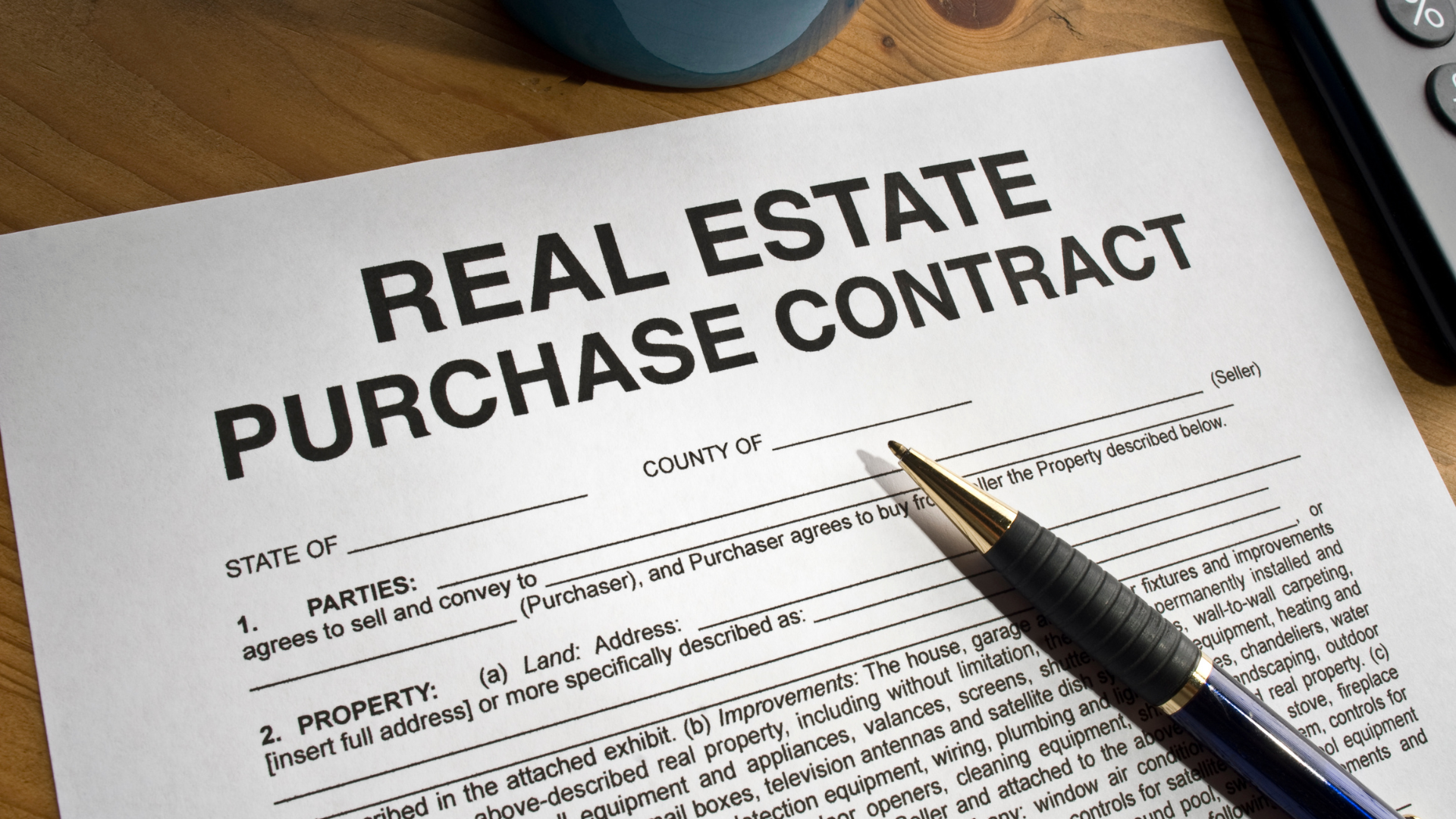
FHA and conventional are not just two interest-rate quotes. They are two different rule systems. In Long Beach, the Gateway Cities, and the South Bay, the better path can depend on credit profile, cash to close, loan size, mortgage insurance, property condition, condo approval, and how certain the offer looks to a seller.
Quick answer
Quick answer
- Use this guide when I am deciding whether FHA or conventional financing gives me the cleaner path to buy in Long Beach, the Gateway Cities, or the South Bay.
- Start with the decision category: Financing & Affordability, then narrow by Long Beach, Gateway Cities, South Bay, Los Angeles County.
- Verify property-specific details, financing, taxes, disclosures, permits, insurance, and local data before acting.
- Related decision path: Seller Credits vs Rate Buydowns: What Buyers Should Ask For in Southern California.
Updated June 30, 2026
Choose the loan that fits the property, not just the payment
A buyer comparing an older Long Beach house, a Gateway Cities fixer, a South Bay condo, and a higher-priced townhome may get different answers from the same lender. FHA may help when down payment or credit flexibility matters. Conventional may be stronger when the property, loan size, mortgage insurance, or seller confidence matters.
The strongest buying decision is rarely the listing that looks cheapest in isolation. It is the one where payment, documents, condition, insurance, rules, and resale still make sense after review.
Before touring, ask a lender to price FHA and conventional side by side using the same purchase price, taxes, insurance, estimated repairs, and HOA dues. Then ask which property types would be harder under each loan type.
Quick comparison
| Option | Usually strongest for | Watch closely |
|---|---|---|
| FHA loan | Buyers who may benefit from lower down payment flexibility, lower credit-score tolerance, or a more forgiving entry point. | FHA mortgage insurance, county loan limits, appraisal repairs, Minimum Property Requirements, condo eligibility, and seller confidence. |
| Low-down-payment conventional | Eligible first-time buyers buying a one-unit primary residence who fit a standard low-down-payment conventional path. | High-balance loans and adjustable-rate loans are not permitted for Fannie Mae's standard 3 percent down purchase path, and mortgage insurance applies when the loan is more than 80 percent of the home value. |
| HomeReady conventional | Income-eligible buyers who fit Fannie Mae's community lending path and want a conventional option with possible flexibilities. | Area median income limits, education requirements for first-time occupying borrowers, automated approval findings, high-balance restrictions for 3 percent down purchases, and property eligibility. |
| Conventional with more cash down | Buyers with stronger credit, more down payment, or a higher-priced property where a cleaner conventional structure may help the offer. | Mortgage insurance if the loan is more than 80 percent of the home value, loan-level pricing, reserve expectations, appraisal risk, and whether the loan is conforming, high-balance, or jumbo. |
| Dual-path preapproval | Buyers who have not chosen the property type yet or are comparing older homes, condos, townhomes, and higher-priced neighborhoods. | The lowest payment quote is not enough; compare property rules, timeline, documentation, repair risk, and offer certainty. |
The short version: FHA helps some buyers, conventional helps some offers
CFPB describes FHA loans as private-lender loans insured and regulated by the Federal Housing Administration. They can allow down payments as low as 3.5 percent and may allow lower credit scores than most conventional loans. CFPB also notes that conventional loans typically cost less than FHA loans but can be harder to get.
That does not mean FHA is always better for affordability or conventional is always better for competition. The right answer depends on the borrower, the property, the loan size, and the seller's confidence in the financing.
Down payment is only the opening question
FHA's handbook states that for FHA to insure the maximum purchase mortgage amount, the borrower must make a Minimum Required Investment of at least 3.5 percent of the adjusted value, and FHA purchase transactions can finance as much as 96.5 percent of that adjusted value when the credit-score and transaction rules fit.
Conventional can also have low-down-payment paths. Fannie Mae's 3 percent down purchase guidance includes a one-unit primary residence, fixed-rate loans up to 30 years, automated underwriting, first-time-buyer rules, and no high-balance or adjustable-rate loans for that standard path. That last point matters in higher-priced parts of Southern California.
Credit profile and underwriting are not the same conversation
FHA's maximum financing generally requires a Minimum Decision Credit Score at or above 580; scores between 500 and 579 are generally limited to financing no more than 90 percent of the adjusted value under the FHA handbook. Conventional underwriting uses a different rule set. Fannie Mae's guide lists minimum credit scores for manually underwritten fixed-rate and adjustable-rate loans, while automated approvals are assessed through broader risk factors.
For a buyer, the practical takeaway is to avoid online shortcuts. Ask the lender to run the real file both ways if both options are plausible, then compare approval strength, documentation, reserves, pricing, and cash to close.
Mortgage insurance changes the long-term math
FHA mortgage insurance is program-based. HUD's Mortgagee Letter 2023-05 states that most FHA mortgages have an upfront mortgage insurance premium of 1.75 percent of the base loan amount, plus an annual mortgage insurance premium that varies by loan term, base loan amount, and how much of the home value is financed.
Conventional mortgage insurance is different. Fannie Mae requires primary mortgage insurance for conventional first mortgages when the loan is more than 80 percent of the home value unless another compliant credit enhancement applies, and premium plans can be monthly, annual, single-premium, or split-premium. Compare total monthly cost, upfront cost, and your expected holding period before choosing.
Property condition can matter more than loan type in older local housing
Long Beach, the Gateway Cities, and the South Bay include plenty of older housing stock, remodel history, converted spaces, long-delayed maintenance, and properties where the inspection/appraisal sequence matters. FHA is not just checking the borrower; the property must satisfy HUD property acceptability criteria.
HUD's handbook says FHA-insured homes must be safe, sound, and secure. If defective conditions exist and correction is not feasible, the mortgagee must reject the property; if defects are reported, the property can be approved only after those defects are corrected. That can make condition screening crucial before writing an FHA offer on an older or heavily modified home.
Condos and townhomes need an early screen
For FHA, a condominium unit generally must be in an FHA-approved condominium project, qualify as a Site Condominium, or complete the FHA Single-Unit Approval process before the mortgage can be insured. That can affect Long Beach condos, South Bay townhomes, and attached-property searches across the region.
Conventional condo and project review has its own rules, too. Do not wait until escrow to ask whether the building, association, insurance, reserves, litigation, rental concentration, or project status creates a financing issue.
Loan limits matter in high-cost Southern California
HUD's 2026 FHA mortgagee letter sets the FHA national low-cost one-unit floor at $541,287 and the high-cost one-unit ceiling at $1,249,125, with individual limits published by MSA and county through HUD's lookup. FHFA's 2026 county CSV lists Los Angeles County and Orange County at the one-unit high-cost conforming limit of $1,249,125.
For Long Beach, Gateway Cities, South Bay, and nearby Orange County comparisons, ask the lender to confirm whether the target property fits FHA, conforming, high-balance, or jumbo treatment before you make the price range feel final.
Offer strategy: sellers care about certainty, not acronyms
A seller does not accept an offer because it says FHA or conventional. A seller accepts because the offer feels likely to close. That means lender quality, proof of funds, clean timelines, appraisal risk, inspection strategy, repair expectations, and communication matter.
A strong FHA offer can beat a weak conventional offer. A strong conventional offer can be better suited to a property with condition, condo, or loan-size complications. The loan label is only one part of the certainty story.
How to compare both before touring
Ask for the same purchase price under FHA and conventional, then compare principal and interest, mortgage insurance, taxes, insurance, HOA dues, cash to close, reserves, seller credits, and lender conditions. Do not compare one best-case FHA quote against a different conventional price point.
Then add the property filter: older house, condo, townhome, remodeled property, high-balance loan size, appraisal risk, repair exposure, and seller timeline. The best loan is the one that still works after the real property shows up.
How to decide before touring
- Ask the lender for side-by-side FHA and conventional scenarios at the same purchase price and monthly comfort level.
- Confirm whether the target price falls under FHA, conforming, high-balance, or jumbo treatment for the county and property type.
- Screen older homes for FHA property-condition issues before assuming the loan will be easy for that property.
- For condos and townhomes, ask about FHA project approval, Single-Unit Approval, and conventional project review before writing.
- Compare total cost, cash to close, mortgage insurance, seller confidence, appraisal risk, and likely repairs before choosing the loan type.
See sources used
This guide uses public CFPB, HUD/FHA, Fannie Mae, and FHFA sources as orientation points. It is not lending, legal, tax, insurance, or financial advice. Verify loan eligibility, pricing, property requirements, county limits, mortgage insurance, condo approval, and offer strategy with your lender and the appropriate professionals before relying on them for a purchase decision.
- Consumer Financial Protection Bureau: FHA loans
- Consumer Financial Protection Bureau: conventional loans
- Consumer Financial Protection Bureau: loan options
- HUD Handbook 4000.1: FHA Single Family Housing Policy Handbook
- HUD Mortgagee Letter 2025-23: 2026 Nationwide Forward Mortgage Loan Limits
- HUD FHA mortgage limits county lookup
- HUD: FHA mortgage limits
- HUD Mortgagee Letter 2023-05: FHA annual mortgage insurance premiums
- Fannie Mae Selling Guide: low-down-payment purchase rules
- Fannie Mae Selling Guide: HomeReady mortgage eligibility
- Fannie Mae Selling Guide: general requirements for credit scores
- Fannie Mae Selling Guide: provision of mortgage insurance
- FHFA: conforming loan limit values
- FHFA: 2026 full county loan limit list CSV
More Financing & Affordability paths
 Seller Credits vs Rate Buydowns: What Buyers Should Ask For in Southern California
 Inspection Contingencies: What Local Buyers Should and Shouldn't Give Up
 How to Find Value Without Chasing the Cheapest Listing
 How to Write a Strong Offer Without Waiving Every Protection
What "As-Is" Really Means When Buying a Home in LA County or Orange County
Selling a Home With Unpermitted Work in LA County or Orange County
How to Write a Strong Offer Without Waiving Every Protection
What "As-Is" Really Means When Buying a Home in LA County or Orange County
Selling a Home With Unpermitted Work in LA County or Orange County