
If you are moving from San Francisco to the South Bay, start by resisting the cleanest-looking shortcut: replacing one Bay Area neighborhood with one Southern California city. Hermosa Beach, Manhattan Beach, Redondo Beach, and El Segundo can all work, but each one solves a different version of the move.
Do not map San Francisco neighborhoods directly onto South Bay cities
San Francisco movers often arrive with familiar questions about density, walkability, commute friction, restaurant access, school logistics, airport access, and neighborhood identity. The South Bay answers those questions differently. Hermosa Beach, Manhattan Beach, Redondo Beach, and El Segundo are close enough to compare, but they do not behave like interchangeable neighborhoods.
The strongest choice is rarely the city that wins every category. It is the one where the tradeoffs are clear enough that you would still choose them after a normal work week.
Name the life you are trying to gain first: more beach routine, more privacy, closer work access, easier airport access, better school logistics, or a more practical home. Then let that answer narrow the city list.
Quick comparison
| Option | Usually strongest for | Watch closely |
|---|---|---|
| Hermosa Beach | A compact beach-town routine, walkability, social energy, and a visible lifestyle change after leaving San Francisco. | Parking, density, lot size, weekend energy, and whether the compact beach feel gives you enough private space. |
| Manhattan Beach | A polished premium beach-city landing spot when privacy, schools, ownership stability, and coastal identity matter. | Budget, property size, school-boundary verification, and whether you are paying for status you do not need. |
| Redondo Beach | A broader South Bay answer with more pocket variety, harbor/coastal context, and more ways to balance beach access with practicality. | North Redondo and South Redondo should be evaluated separately because the day-to-day routine can change significantly. |
| El Segundo | A close-in landing spot when job proximity, smaller-city rhythm, aerospace and business access, or LAX convenience matter. | Whether living close to work still gives you the lifestyle change you expected when leaving San Francisco. |
The South Bay is not a direct translation of San Francisco
San Francisco gives people a habit of comparing neighborhoods by walkability, density, transit, restaurants, school tradeoffs, and how much daily life can happen close to home.
Those questions still matter in the South Bay, but the map is different.
A city name can carry more of the decision than a neighborhood name, and a few miles can change the beach routine, parking, school district, commute path, and property type.
Use San Francisco as the origin lens, not as the scoring system. The right South Bay landing spot should solve the reason you are moving, not simply feel like the closest emotional substitute.
Hermosa Beach: best when you want the move to feel beach-forward
Hermosa Beach is the strongest fit when the goal is a compact coastal routine. The appeal is not only the sand.
It is the way the beach, restaurants, workouts, errands, and evening walks can sit closer together than they do in many larger Southern California cities.
The tradeoff is that compact beach life can come with friction.
Parking, density, lot size, weekend activity, and privacy all deserve a serious look before you decide that beach energy is the same thing as everyday ease.
Manhattan Beach: best when polish, privacy, and long-term ownership matter
Manhattan Beach is often the premium South Bay answer for San Francisco relocators who want the move to feel stable, polished, and high-confidence.
It can be a strong fit for buyers who care about residential feel, school-district verification, privacy, long-term ownership, and a recognizable beach-city identity.
The risk is over-buying the label.
A Manhattan Beach address can still be the wrong home if the budget, layout, parking, lot size, commute pattern, or school-boundary details do not support the life you actually need.
Redondo Beach: best when you want more ways to make the South Bay work
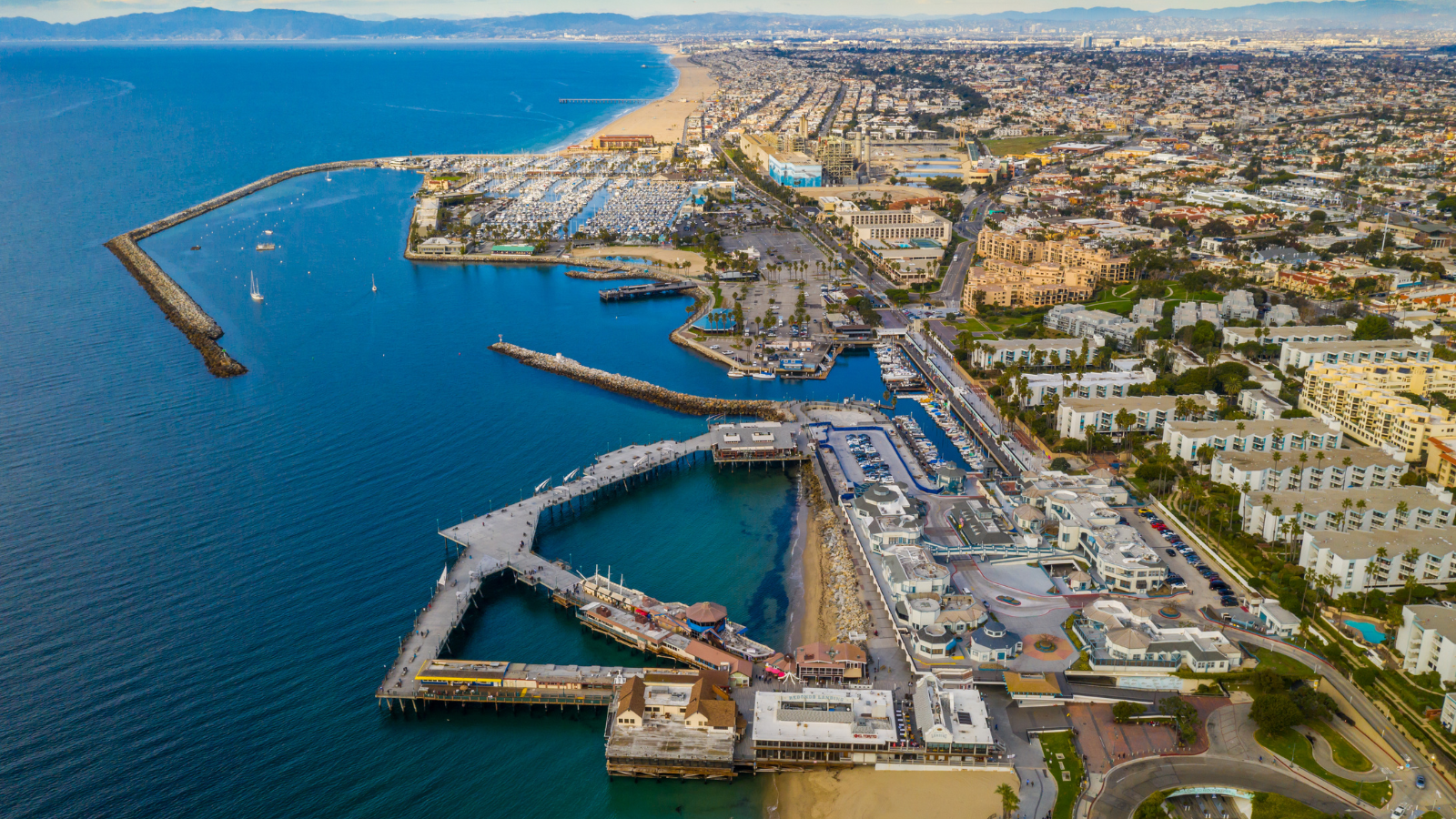
Redondo Beach is useful because it gives San Francisco movers more than one version of the South Bay. South Redondo can feel tied to the harbor, pier, and coastal routine.
North Redondo can feel more practical for households that want South Bay access without making every part of the decision about being closest to the sand.
Do not compare Redondo as one simple city.
The article-worthy distinction is the pocket: North versus South, harbor-adjacent versus inland, townhome versus single-family, school-boundary details, and the route to work or the airport.
El Segundo: best when work access is part of the lifestyle decision
El Segundo can make sense when the job location, LAX access, aerospace or business corridor, and a smaller-city daily rhythm are major reasons for moving south.
For some San Francisco movers, reducing commute uncertainty is the lifestyle upgrade.
The question is whether that practical advantage gives you enough of the Southern California life you came for.
If the move is really about beach routine, neighborhood energy, or more housing flexibility, compare El Segundo against nearby beach cities before choosing the closest option.
Schools, parking, transit, and airport access need address-level checks
If schools matter, use official district sites as starting points and verify the specific property address before relying on reputation.
Manhattan Beach Unified, Hermosa Beach City School District, and Redondo Beach Unified each need direct review when a listing is under consideration.
The same rule applies to LAX, Beach Cities Transit, parking rules, and commute routes.
Public sources can orient the search, but the decision should be tested against the exact weekday, weekend, travel, and school routines your household will actually live.
How to decide before touring
- Write down the reason San Francisco no longer fits: space, ownership stability, school logistics, weather, beach access, job location, travel, or daily friction.
- Choose the primary South Bay anchor: compact beach routine, premium beach-city polish, broader coastal flexibility, or close-in work access.
- Compare one ordinary weekday and one ordinary weekend in each city before deciding from listings alone.
- Verify school district, parking, transit, LAX access, HOA, insurance, and property-specific constraints before treating a city as solved.
- Tour only after you can explain which tradeoff you are deliberately choosing.
Local video context
Watch local video context after you narrow the comparison
Use these playlists as supporting local context after the city list is narrow enough to compare daily life, commute, and market fit.
See sources used
This guide uses public city, school district, migration, tax, lending, employment, transportation, and other relevant local sources as orientation points, then translates them into practical decision questions. Verify commute, school enrollment, zoning, tax, lending, insurance, occupancy, and property-specific details with the appropriate professionals before relying on them for a real estate decision.
- San Francisco Planning: Housing Element Update 2022
- City of El Segundo: About Us
- El Segundo Economic Development: Aerospace Capital of the World
- City of Manhattan Beach facts
- City of Manhattan Beach parking meters and lots
- City of Hermosa Beach community information
- City of Hermosa Beach economic development
- City of Hermosa Beach parking
- City of Redondo Beach overview
- Redondo Beach Pier and King Harbor
- Beach Cities Transit Line 109
- Los Angeles World Airports: LAX
- Manhattan Beach Unified School District
- Hermosa Beach City School District
- Redondo Beach Unified School District
More Move / Relocate paths
 From San Francisco, Hermosa and Manhattan Offer Different Coastal Lives
 Near El Segundo, the Right South Bay City Starts With Your Week
 The Best El Segundo Move Balances Commute With Beach Life
 Choose the South Bay Neighborhood Before the Tour Schedule Takes Over
 Manhattan Beach CA Homes: Schools, Sections & Ownership Tradeoffs
 A Torrance Job Opens Several South Bay Home Bases